Command Query Separation for AWS Lambda ⚡
✔️ Provides generic function support for commands and queries with Amazon API Gateway
✔️ Enables APIs based on HTTP POST and GET
📄 https://hlaueriksson.me/CommandQuery.AWSLambda/
Install the CommandQuery.AWSLambda package from NuGet
PM>Install-Package CommandQuery.AWSLambda
Create functions
Preferably named Command and Query
Create commands and command handlers
Implement ICommand and ICommandHandler<in TCommand>
Or ICommand<TResult> and ICommandHandler<in TCommand, TResult>
Create queries and query handlers
Implement IQuery<TResult> and IQueryHandler<in TQuery, TResult>
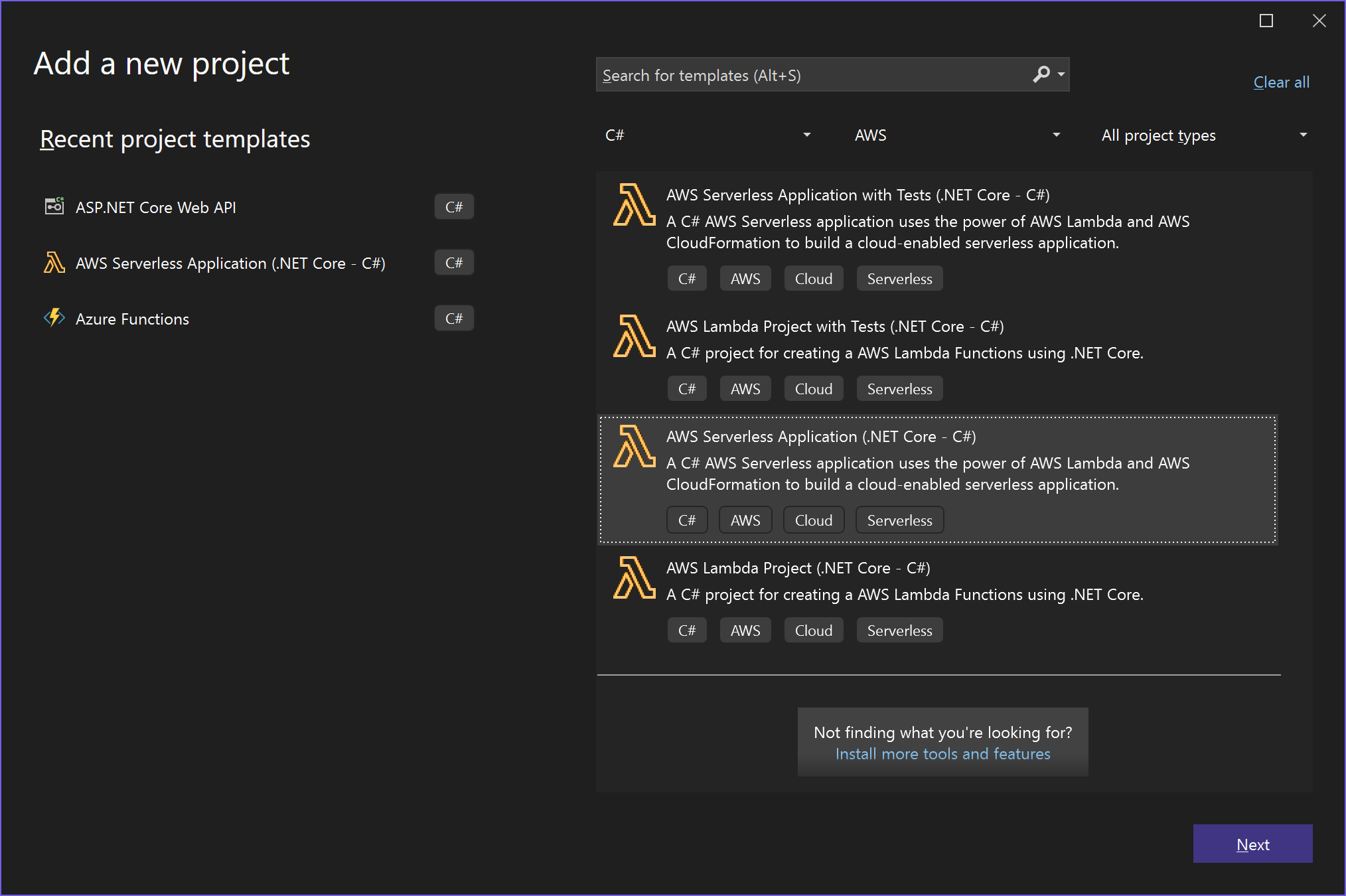
Configure the serverless template
Choose:
AWS Serverless Application (.NET Core - C#)
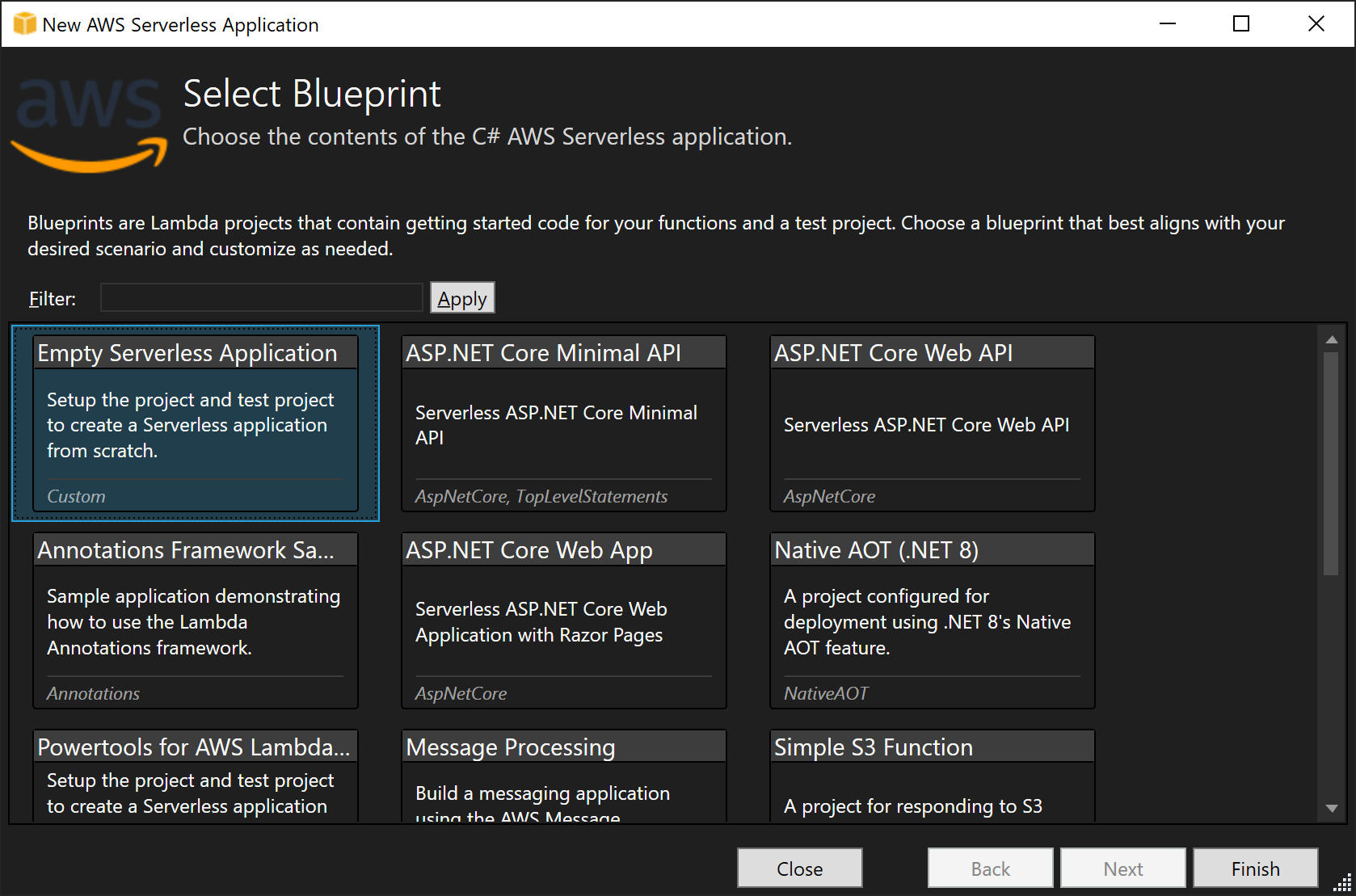
Choose:
Empty Serverless Application
Commands
using Amazon.Lambda.Annotations;
using Amazon.Lambda.Annotations.APIGateway;
using Amazon.Lambda.APIGatewayEvents;
using Amazon.Lambda.Core;
using CommandQuery.AWSLambda;

namespace CommandQuery.Sample.AWSLambda;

public class Command(ICommandFunction commandFunction)
{
    [LambdaFunction(Policies = "AWSLambdaBasicExecutionRole", MemorySize = 256, Timeout = 30)]
    [RestApi(LambdaHttpMethod.Post, "/command/{commandName}")]
    public async Task<APIGatewayProxyResponse> Post(
        APIGatewayProxyRequest request,
        ILambdaContext context,
        string commandName) =>
        await commandFunction.HandleAsync(commandName, request, context.Logger);
}
The function is requested via HTTP POST with the Content-Type application/json in the header.
The name of the command is the slug of the URL.
The command itself is provided as JSON in the body.
If the command succeeds; the response is empty with the HTTP status code 200.
If the command fails; the response is an error message with the HTTP status code 400 or 500.
Commands with result:
If the command succeeds; the response is the result as JSON with the HTTP status code 200.
Queries
using Amazon.Lambda.Annotations;
using Amazon.Lambda.Annotations.APIGateway;
using Amazon.Lambda.APIGatewayEvents;
using Amazon.Lambda.Core;
using CommandQuery.AWSLambda;

namespace CommandQuery.Sample.AWSLambda
{
    public class Query(IQueryFunction queryFunction)
    {
        [LambdaFunction(Policies = "AWSLambdaBasicExecutionRole", MemorySize = 256, Timeout = 30)]
        [RestApi(LambdaHttpMethod.Get, "/query/{queryName}")]
        public async Task<APIGatewayProxyResponse> Get(
            APIGatewayProxyRequest request,
            ILambdaContext context,
            string queryName) =>
            await queryFunction.HandleAsync(queryName, request, context.Logger);

        [LambdaFunction(Policies = "AWSLambdaBasicExecutionRole", MemorySize = 256, Timeout = 30)]
        [RestApi(LambdaHttpMethod.Post, "/query/{queryName}")]
        public async Task<APIGatewayProxyResponse> Post(
            APIGatewayProxyRequest request,
            ILambdaContext context,
            string queryName) =>
            await queryFunction.HandleAsync(queryName, request, context.Logger);
    }
}
The function is requested via:
HTTP POST with the Content-Type application/json in the header and the query itself as JSON in the body
HTTP GET and the query itself as query string parameters in the URL
The name of the query is the slug of the URL.
If the query succeeds; the response is the result as JSON with the HTTP status code 200.
If the query fails; the response is an error message with the HTTP status code 400 or 500.
Configuration
Configuration in Startup.cs:
using Amazon.Lambda.Annotations;
using Amazon.Lambda.Core;
using CommandQuery.AWSLambda;
using CommandQuery.Sample.Contracts.Commands;
using CommandQuery.Sample.Contracts.Queries;
using CommandQuery.Sample.Handlers;
using CommandQuery.Sample.Handlers.Commands;
using CommandQuery.Sample.Handlers.Queries;
using Microsoft.Extensions.DependencyInjection;

[assembly: LambdaSerializer(typeof(Amazon.Lambda.Serialization.SystemTextJson.DefaultLambdaJsonSerializer))]

namespace CommandQuery.Sample.AWSLambda;

[LambdaStartup]
public class Startup
{
    public void ConfigureServices(IServiceCollection services)
    {
        //services.AddSingleton(new JsonSerializerOptions(JsonSerializerDefaults.Web));

        // Add commands and queries
        services.AddCommandFunction(typeof(FooCommandHandler).Assembly, typeof(FooCommand).Assembly);
        services.AddQueryFunction(typeof(BarQueryHandler).Assembly, typeof(BarQuery).Assembly);

        // Add handler dependencies
        services.AddTransient<IDateTimeProxy, DateTimeProxy>();
        services.AddTransient<ICultureService, CultureService>();

        // Validation
        var serviceProvider = services.BuildServiceProvider();
        serviceProvider.GetService<ICommandProcessor>()!.AssertConfigurationIsValid();
        serviceProvider.GetService<IQueryProcessor>()!.AssertConfigurationIsValid();
    }
}
The extension methods AddCommandFunction and AddQueryFunction will add functions and all command/query handlers in the given assemblies to the IoC container.
You can pass in a params array of Assembly arguments if your handlers are located in different projects.
If you only have one project you can use typeof(Program).Assembly as a single argument.
using System.Text.Json;
using Amazon.Lambda.APIGatewayEvents;
using Amazon.Lambda.TestUtilities;
using CommandQuery.AWSLambda;
using CommandQuery.Sample.Contracts.Commands;
using FluentAssertions;
using Microsoft.Extensions.DependencyInjection;
using NUnit.Framework;

namespace CommandQuery.Sample.AWSLambda.Tests
{
    public class CommandTests
    {
        [SetUp]
        public void SetUp()
        {
            var serviceCollection = new ServiceCollection();
            new Startup().ConfigureServices(serviceCollection);
            var serviceProvider = serviceCollection.BuildServiceProvider();

            Subject = new Command(serviceProvider.GetRequiredService<ICommandFunction>());
            Context = new TestLambdaContext();
        }

        [Test]
        public async Task should_handle_command()
        {
            var response = await Subject.Post(GetRequest(new FooCommand { Value = "Foo" }), Context, "FooCommand");
            response.StatusCode.Should().Be(200);
        }

        [Test]
        public async Task should_handle_errors()
        {
            var response = await Subject.Post(GetRequest(new FooCommand()), Context, "FooCommand");
            response.ShouldBeError("Value cannot be null or empty");
        }

        static APIGatewayProxyRequest GetRequest(object body) => new() { Body = JsonSerializer.Serialize(body) };

        Command Subject = null!;
        TestLambdaContext Context = null!;
    }
}